

Extra Care for Patients with Diabetes
Patients with diabetes require extra attention to safeguard their vision over time. This metabolic condition creates a higher risk for certain eye diseases and places you at an increased risk for developing diabetic retinopathy.
If you have diabetes, it is vital to have your eyes checked regularly—at least once a year—and to inform your optometrist so they can provide the targeted care you need to support your long-term sight.
If it has been more than a year since your last eye exam, book your next appointment today.
How Does Diabetes Affect the Eyes?
Fluctuating or elevated blood sugar levels can damage the small, delicate blood vessels located throughout your body, particularly those in the retina at the back of your eye. Over time, high blood glucose causes these tiny vessels to swell, leak fluid, or close off entirely, disrupting healthy blood circulation to your eyes.
Common eye conditions that result from diabetes complications include:
- Diabetic retinopathy
- Diabetic macular edema
- Cataracts
- Glaucoma
- Age-related macular degeneration (AMD)
What Are Diabetic Eye Diseases?
Diabetic retinopathy is a leading cause of vision impairment among working-age adults. In its early stage, weakened retinal blood vessels develop tiny bulges that leak fluid or blood into the eye.
As the condition advances, severe circulation blockages trigger the growth of fragile new blood vessels that bleed easily inside the eye and form scar tissue.
When these damaged, leaking blood vessels cause fluid to accumulate in the macula, it progresses into diabetic macular edema. Without monitoring and early intervention, diabetic macular edema causes severe visual distortion, blurriness, and central vision loss.
What Happens During a Diabetic Eye Exam
Diabetic eye exams follow the same overall structure as a standard comprehensive eye exam, evaluating visual acuity, eye muscle coordination, and general eye health.
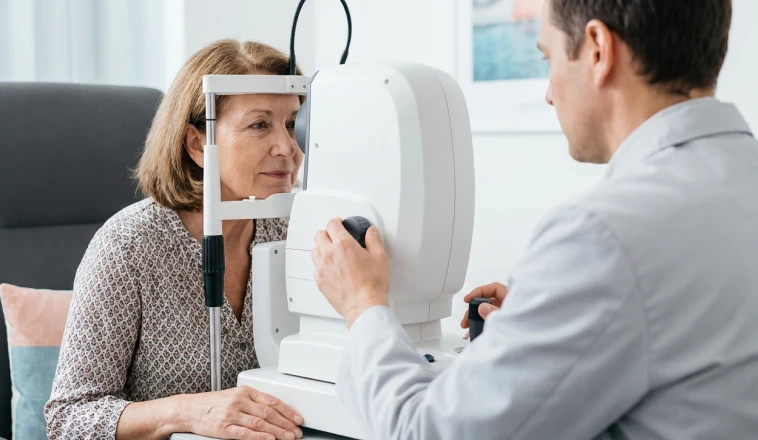
However, a diabetic assessment also includes pupil dilation using specialized eye drops to provide your optometrist with a clear view of your retina, blood vessels, and optic nerve. Your appointment may also include additional diagnostic imaging to map retinal structures in detail.
Routine diabetic eye health assessments are covered by Saskatchewan Health for residents with a diabetes diagnosis, making these essential annual exams easily accessible.
Our Technology for a Diabetic Eye Exam
Our diagnostic technology allows our optometrists to evaluate your eye health with high precision. We use a variety of tests that assess different structures of your eye and parts of your vision that may be affected by diabetic complications.
Performing a thorough assessment helps detect subtle structural changes long before you notice visual symptoms, allowing for timely care.
Optomap digital imaging captures an ultra-widefield view of your retina in a single scan. This technology allows our optometrists to examine the outer edges of your retina for early signs of diabetic vessel damage without uncomfortable bright lights. The stored digital images enable precise side-by-side comparisons during your annual exams.
Optical Coherence Tomography uses light waves to generate detailed 3D maps of your retinal layers. This noninvasive scan measures the thickness of individual retinal tissues down to the micron level. OCT is particularly useful for detecting early fluid buildup and swelling associated with diabetic macular edema.
The Frequency Doubling Technology (FDT) Matrix visual field test measures your peripheral vision to evaluate how well your eyes perceive light across the entire area of your vision. It identifies subtle patches of vision loss that might indicate early optic nerve damage or reduced retinal blood flow. This quick assessment aids in detecting secondary complications like glaucoma.
Safeguard Your Sight with Regular Eye Care
Managing diabetes involves monitoring your visual health just as closely as your blood sugar levels. Because many diabetic eye conditions progress without early pain or noticeable visual loss, regular clinical monitoring remains the most effective defence against permanent vision loss.
We recommend all patients living with diabetes have a comprehensive eye exam at least once each year. Schedule your diabetic eye exam at Stonebridge Eyecare today to keep your eyes healthy.
Frequently Asked Questions About Diabetic Eye Care
Diabetic eye exams are essential because uncontrolled blood sugar can damage the blood vessels in your eyes long before you notice any visual changes. Early detection through regular exams allows your optometrist to monitor your eye health and help prevent permanent vision loss.
Individuals with diabetes should receive a comprehensive diabetic eye exam at least once every year to track changes in their health. If it has been more than 1 year since your last exam or if you experience sudden vision changes, please book an appointment with our team today.
Fluctuating blood sugar levels can weaken or damage blood vessels in the retina, leading to diabetic retinopathy, diabetic macular edema, cataracts, and glaucoma. Over time, unmanaged diabetes can cause fluid leakage, swelling, and permanent vision impairment.
While a routine exam focuses on prescription strength and general eye health, a diabetic eye exam includes additional tests and imaging. Your optometrist uses advanced retinal imaging and detailed microscopic checks to search for subtle signs of diabetic eye disease.
Yes, pupil dilation is standard during a diabetic eye exam because it widens your pupil to give your optometrist a clear view of your entire retina and optic nerve. Dilating your eyes makes it much easier to spot concerns early on.
Warning signs include blurry or fluctuating vision, dark spots, floaters, poor night vision, or washed-out colours in your visual field. If you notice any of these symptoms or if it has been more than 1 year since your last checkup, schedule a diabetic eye exam at Stonebridge Eyecare right away.

Visit Our Location
We’re located in Stonebridge, on the corner of Cope Lane and Stonebridge Boulevard. Find us next to the Saskatoon Dermatology Centre and Stonebridge Dental Centre. Free parking is available.
Our Address
Contact Information
- Phone: 306-664-2638
- Fax: 306-653-5822
- Email: secadmin@yxevision.ca
After Hours Emergencies: 306-371-9911
Hours of Operation
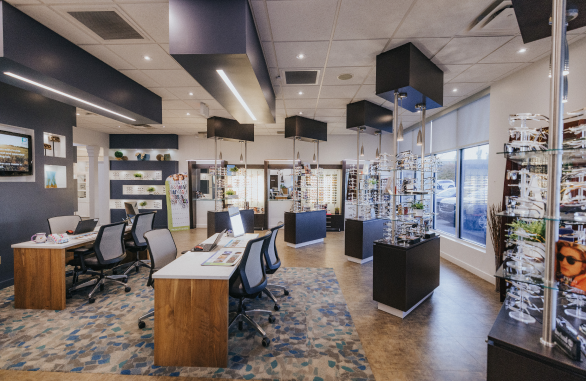
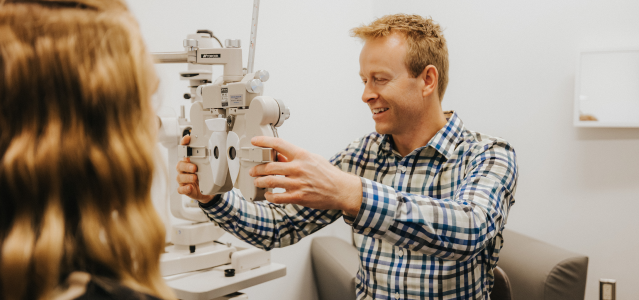
A Look
Inside Stonebridge Eyecare



See What Our Patients Are Saying
